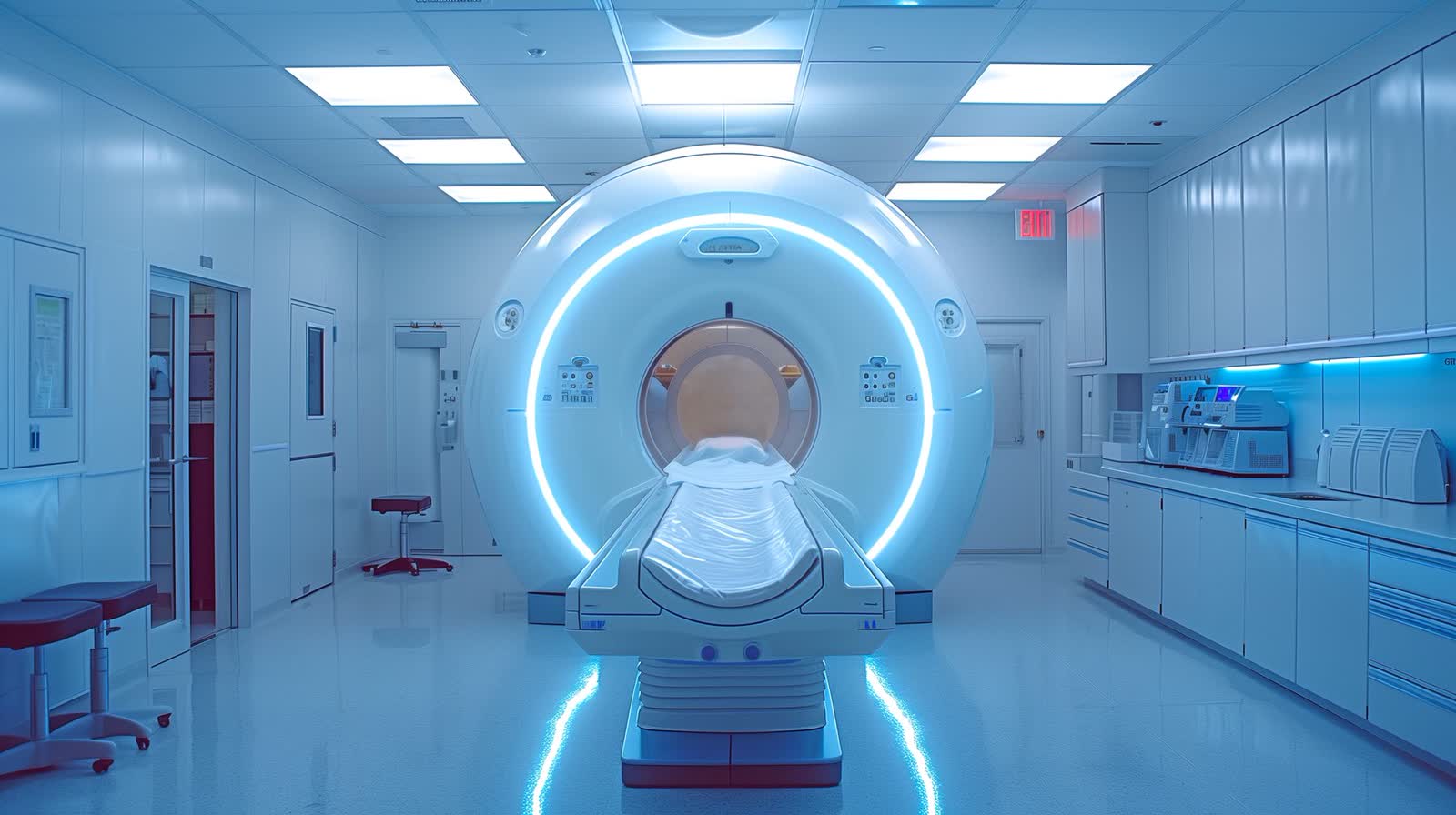
MRI Scans in Sarasota–Bradenton
← All Guides
The complete 2026 guide to

MRI Scans in Sarasota

Overview

What are mri scans?

MRI (magnetic resonance imaging) uses a strong magnet and radio waves, with no ionizing radiation, to produce detailed images of soft tissue, joints, the brain, and the spine.

Local centers offer several MRI types: high-field (typically 1.5T or 3T) closed bore for the sharpest images, Open MRI for claustrophobic patients, and wide-bore/Oval/HIGH-V (around 70-80 cm) machines that accommodate larger or anxious patients. Cash/self-pay prices in the Sarasota-Bradenton market vary widely by body part, contrast, and facility type (freestanding outpatient centers are usually far cheaper than hospital outpatient departments). Always confirm whether contrast is needed and get a written self-pay quote.

Compare options

Your options.

MRI without contrast (one body part)

Most common study (e.g., knee, lumbar spine, brain).

Freestanding outpatient centers typically lowest; hospital-based higher. $400-$1,200 self-pay
MRI with contrast

Adds gadolinium contrast for tumors, infection, or vascular detail.

Some studies require both with and without sequences. $600-$1,800 self-pay
Open or Upright Open MRI

For claustrophobic patients or weight-bearing imaging.

Image detail can be lower than high-field closed MRI. $450-$1,300 self-pay
Wide-bore / Oval / HIGH-V MRI

Larger opening for claustrophobic or bariatric patients at high field strength.

Combines comfort with high-field image quality. $450-$1,400 self-pay
Real Sarasota pricing

What mri scans costs.

Option
Typical range
Notes
Single-region MRI, no contrast (outpatient)
$400-$1,200
Self-pay/cash price; insurance-negotiated rates differ.
MRI with contrast
$600-$1,800
Higher for multi-region or specialized protocols.
Radiologist read fee
Often bundled
Freestanding centers usually quote a global (technical + professional) price.

Featured

Top mri scans doctors.

Browse all radiology & imaging doctors →
How to choose

Board certification, explained.

A Florida medical license lets a physician practice, but board certification is the signal that a doctor completed accredited residency training and passed rigorous exams in their specialty. Look for certification by the American Board of Medical Specialties (ABMS) member board that matches the care you need — and verify it yourself.

ABMS member-board certification
The ABMS oversees 24 specialty boards (internal medicine, surgery, radiology, OB-GYN, and more). Certification in the relevant specialty — confirmed at certificationmatters.org — is the core credential to look for.
Board certified vs. board eligible
“Board eligible” means residency is complete but the certifying exam is not yet passed; “board certified” is the finished credential. Most boards also require ongoing Maintenance of Certification.
Fellowship & subspecialty training
Additional 1–3 year fellowships add focused expertise (e.g., interventional cardiology, surgical oncology, electrophysiology). Match the subspecialty to your specific condition.
Questions to ask your doctor
  1. Are you board certified by the ABMS board for this specialty?
  2. How often do you treat my specific condition or perform this procedure?
  3. What does the full course of treatment involve, and what are the alternatives?
  4. Will this be covered by my insurance, and what should I expect to owe?
Your questions

MRI Scans FAQs.

Is an MRI safe? Does it use radiation?+

MRI does not use ionizing radiation; it uses a magnetic field and radio waves. It is considered very safe, but you must disclose any implants, pacemakers, metal fragments, or pregnancy. This is general information, not medical advice.

How long does an MRI take?+

Most single-region MRI scans take roughly 20-45 minutes. Studies with contrast or multiple regions take longer.

Open MRI vs. closed (high-field) MRI - which is better?+

High-field closed MRI generally gives the most detailed images. Open and wide-bore MRI are better tolerated by claustrophobic or larger patients. Your ordering physician can advise which suits your study.

Why are outpatient MRI prices lower than the hospital?+

Freestanding imaging centers usually have lower facility fees than hospital outpatient departments, so cash prices are often substantially lower for the same scan.

Do I need a referral?+

Most insurers require a physician order and often prior authorization for MRI. Some self-pay patients can schedule with a referral; policies vary by center.

Will my insurance cover it?+

Coverage depends on medical necessity and prior authorization. Call your insurer and the imaging center for an estimate before scheduling. This is general information, not medical or billing advice.

References & sources

Procedure facts on this page draw on authoritative medical sources. Confirm specifics in a consultation.

ACR / RSNA — RadiologyInfo ↗American College of Radiology ↗
Boards & certification

Choose a board-certified doctor — and verify it yourself:

ABMS — Certification Matters ↗ Look up any U.S. physician’s board certification across all 24 ABMS member specialty boards. Florida DOH — License Verification ↗ Confirm an active Florida license and review any disciplinary history. NPI Registry (CMS) ↗ Verify a provider’s national identifier and registered specialty taxonomy. Medicare Care Compare ↗ Compare clinicians, hospitals and facilities on quality measures.

★★★★★

Ready to find your doctor?

Compare Sarasota–Bradenton's top-rated radiology & imaging doctors — vetted, reviewed, and ranked.

See the Top Doctors