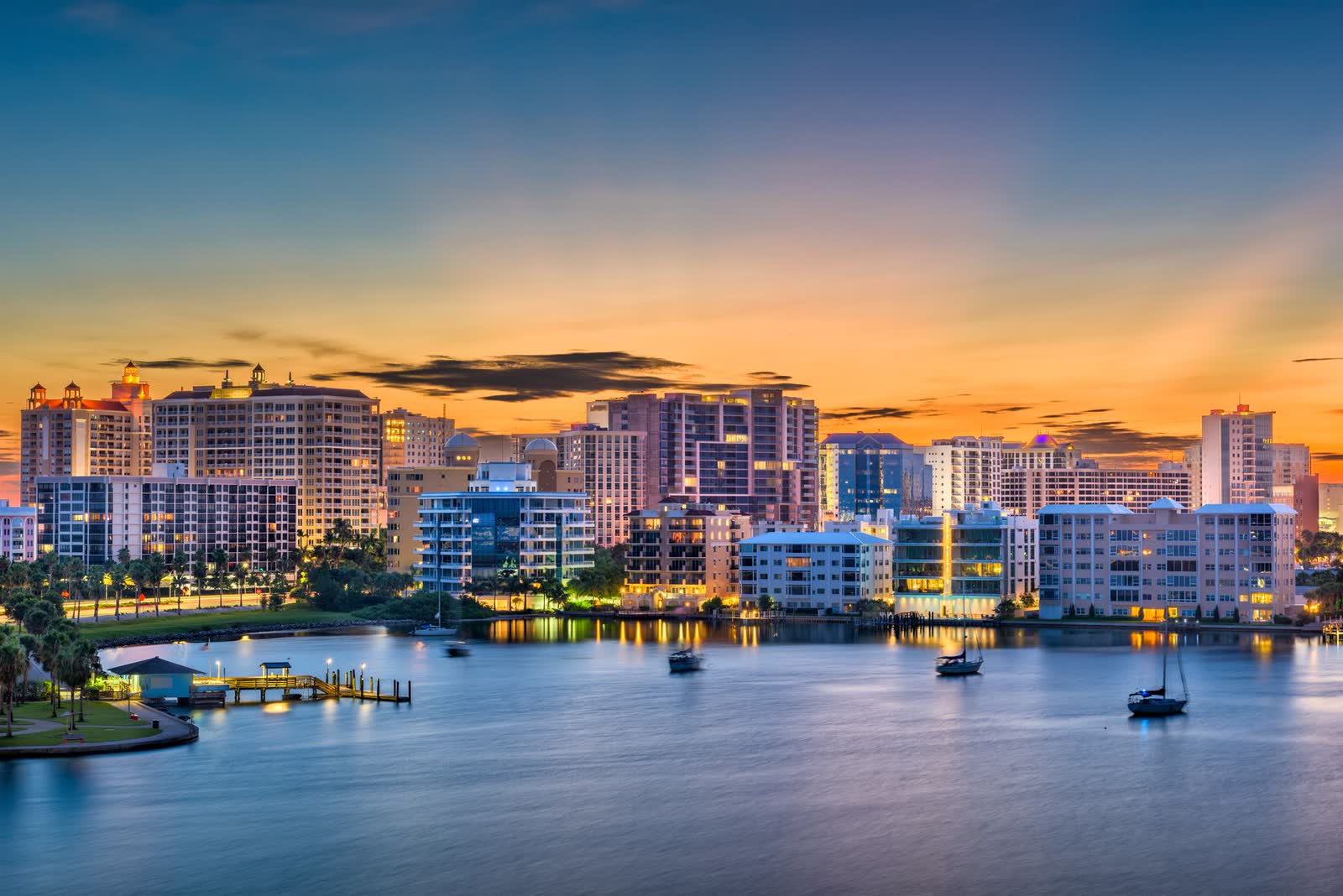
Echocardiograms & Heart Imaging in Sarasota–Bradenton
← All Guides
The complete 2026 guide to

Echocardiograms & Heart Imaging in Sarasota

Overview

What are echocardiograms & heart imaging?

An echocardiogram is one of the most common first tests a cardiologist orders.

An echocardiogram (echo) uses ultrasound to create moving images of your heart's chambers, valves and pumping function. It is painless, involves no radiation and is widely used in Sarasota-Bradenton cardiology offices to evaluate murmurs, shortness of breath, valve problems and heart failure. Related noninvasive imaging includes stress echo, nuclear stress imaging, vascular/carotid ultrasound and cardiac CT. Costs vary widely with insurance, facility and whether the test is done in an office versus a hospital outpatient department.

Compare options

Your options.

Transthoracic echocardiogram (TTE)

Standard ultrasound from the chest surface; the everyday echo.

Office settings are often cheaper than hospital outpatient. $250-$1,500
Stress echocardiogram

Echo before and after exercise or medication to assess blood flow.

Combines a stress test with imaging. $500-$2,500
Transesophageal echo (TEE)

Probe passed down the esophagus for detailed valve/clot views.

Done with sedation; usually hospital-based. $1,500-$4,000+
Carotid / vascular ultrasound

Ultrasound of neck or leg arteries to check for blockages.

Often bundled into a vascular workup. $200-$1,200
Real Sarasota pricing

What echocardiograms & heart imaging costs.

Option
Typical range
Notes
Standard echo (TTE), office
$250-$1,500
Before insurance; many plans cover most of the cost when medically necessary.
Stress echo
$500-$2,500
Higher because it includes the stress portion and extra imaging.
Out-of-pocket with insurance
$0-$400
Depends on deductible, copay and whether the facility is in-network.

Featured

Top echocardiograms & heart imaging doctors.

Browse all cardiology doctors →
How to choose

Board certification, explained.

A Florida medical license lets a physician practice, but board certification is the signal that a doctor completed accredited residency training and passed rigorous exams in their specialty. Look for certification by the American Board of Medical Specialties (ABMS) member board that matches the care you need — and verify it yourself.

ABMS member-board certification
The ABMS oversees 24 specialty boards (internal medicine, surgery, radiology, OB-GYN, and more). Certification in the relevant specialty — confirmed at certificationmatters.org — is the core credential to look for.
Board certified vs. board eligible
“Board eligible” means residency is complete but the certifying exam is not yet passed; “board certified” is the finished credential. Most boards also require ongoing Maintenance of Certification.
Fellowship & subspecialty training
Additional 1–3 year fellowships add focused expertise (e.g., interventional cardiology, surgical oncology, electrophysiology). Match the subspecialty to your specific condition.
Questions to ask your doctor
  1. Are you board certified by the ABMS board for this specialty?
  2. How often do you treat my specific condition or perform this procedure?
  3. What does the full course of treatment involve, and what are the alternatives?
  4. Will this be covered by my insurance, and what should I expect to owe?
Your questions

Echocardiograms & Heart Imaging FAQs.

Does an echocardiogram hurt?+

A standard echo is painless and noninvasive. A technician moves a probe with gel across your chest. A TEE is more involved and uses sedation, but most people tolerate it well.

Will my insurance cover an echo?+

Most insurance and Medicare plans cover echocardiograms when ordered for a medical reason. Your out-of-pocket cost depends on your deductible, copay and whether the provider is in network. Confirm coverage with your plan and the office.

Why is a hospital echo more expensive than an office echo?+

Hospital outpatient departments often add a facility fee on top of the professional fee, so the same test can cost more there than in a standalone cardiology office. It is worth asking where the test will be performed.

How should I prepare?+

For a standard echo, usually no special prep is needed. For a stress echo you may be asked to avoid caffeine and certain medications and to wear comfortable clothing and shoes. Follow the specific instructions your cardiology office gives you.

How long does it take to get results?+

The images are typically reviewed by a cardiologist and results are often available within a few days, sometimes the same day. Your doctor will explain what the findings mean for you.

Is this medical advice?+

No. This is general information to help you prepare questions for a licensed cardiologist. It is not medical advice, and you should rely on your own physician for decisions about testing and treatment.

References & sources

Procedure facts on this page draw on authoritative medical sources. Confirm specifics in a consultation.

American College of Cardiology — CardioSmart ↗American Heart Association ↗
Boards & certification

Choose a board-certified doctor — and verify it yourself:

ABMS — Certification Matters ↗ Look up any U.S. physician’s board certification across all 24 ABMS member specialty boards. Florida DOH — License Verification ↗ Confirm an active Florida license and review any disciplinary history. NPI Registry (CMS) ↗ Verify a provider’s national identifier and registered specialty taxonomy. Medicare Care Compare ↗ Compare clinicians, hospitals and facilities on quality measures.
★★★★★

Ready to find your doctor?

Compare Sarasota–Bradenton's top-rated cardiology doctors — vetted, reviewed, and ranked.

See the Top Doctors